
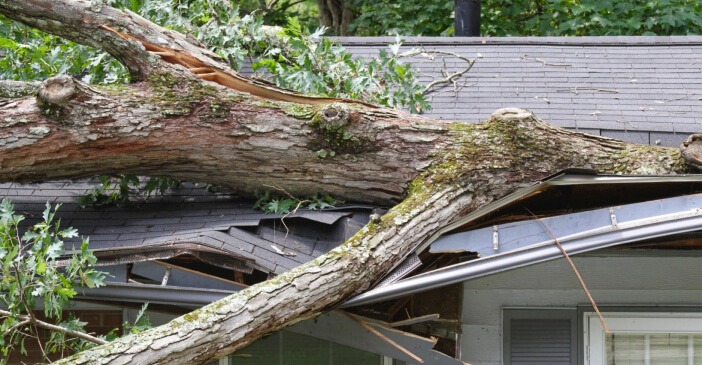

When a line of severe weather rolls across Berry Farms and the sky finally clears, the first thing many homeowners notice is not a hole in the roof. It is a shingle in the yard, a bent gutter, or a strange whistling sound in the attic when the next breeze passes through. Wind damage rarely presents itself in obvious ways, and that is exactly what makes it so costly when left unaddressed. Tim Leeper Roofing works with property owners throughout Berry Farms and the surrounding Clarksville, Murfreesboro, Franklin, Old Hickory, and all surrounding areas communities to identify, document, and repair wind-related roof damage before small problems turn into water intrusion, structural decay, or full roof failure.
How Wind Actually Damages a Roof
Wind does not lift an entire roof off in a single event very often. Instead, it works incrementally. Gusts create pressure differentials across the roof surface, with uplift forces concentrating along ridges, eaves, and corners where wind speed increases as air moves over the structure. These are the same zones where fasteners are most stressed and where the adhesive seal between shingle courses is most likely to break. A single strong gust can loosen the sealant strip that bonds one shingle to the one below it, leaving the shingle free to flap and eventually tear away.
Once that sealant bond breaks, the shingle no longer lies flat. Even if it stays physically attached to the deck, it now allows wind-driven rain to travel underneath it and reach the underlayment or the wood decking. Over repeated storms, this creates a widening path for moisture. In Berry Farms, where summer thunderstorms can carry sustained winds and sudden downbursts, this pattern of progressive loosening is one of the most common causes of interior leaks that appear weeks or even months after the storm that started the problem.
Signs of Wind Damage You Can Look For
Most homeowners are not comfortable climbing onto a roof after a storm, and we do not recommend it. There are, however, several indicators you can safely observe from the ground or from inside your home that suggest wind damage may have occurred. Recognizing these early gives you the best chance of a straightforward repair rather than a large-scale reconstruction.
- Shingle debris in the yard or gutters: Loose granules, torn shingle fragments, or whole shingles on the ground almost always point to wind that exceeded the roof’s holding capacity.
- Lifted or curled shingles visible from ground level: Shingles that no longer sit flat, especially along the ridge line or roof edges, indicate broken sealant bonds.
- Exposed or missing fasteners: Nail heads that have backed out or shiny spots where shingles used to sit are clear warning signs.
- Interior staining or attic light: Water spots on ceilings or daylight visible through the attic decking mean moisture already has a path inside.
- Damaged flashing or gutters: Bent metal around chimneys, vents, and valleys often accompanies wind events and creates its own leak points.
If you notice any of these conditions, it is worth having a professional inspection performed. Wind damage tends to be worse than it appears from the ground, because the shingles that are visibly displaced are often accompanied by neighboring shingles that have lost their seal but have not yet moved. Tim Leeper Roofing inspects the entire roof plane rather than only the obviously affected area, so that hidden weaknesses are caught in the same visit.
Our Wind Damage Repair Process
Every repair begins with a thorough assessment. We evaluate the full roof surface, the flashing details, the ventilation components, and the condition of the underlayment where it can be accessed. We document what we find with photographs and detailed notes, which serves two purposes: it gives you a clear record of the roof’s condition, and it provides the supporting evidence you may need if you decide to file an insurance claim for storm-related damage.
From there, we develop a repair plan matched to the extent of the damage. For localized wind damage, this may involve replacing individual shingle courses, re-sealing loosened shingles, and correcting any fastener issues. For more extensive damage, where large sections have lost their weatherproofing integrity, a partial or complete roof replacement may be the more cost-effective long-term solution. We explain the reasoning behind each recommendation so you can make an informed decision rather than simply being told what to do.
Because Tim Leeper Roofing is an Owens Corning Platinum Preferred Contractor, we install materials that meet manufacturer wind-resistance ratings and follow the installation specifications required to maintain those ratings. Proper nailing patterns, correct fastener placement, and appropriate starter strip and ridge cap installation are not optional details. They are the difference between a roof that resists the next storm and one that fails again in the same spot. Our workmanship is backed by a 20-year workmanship warranty, which reflects our confidence that a properly repaired roof will hold up over the long term.
Situations Where Wind Damage Repair Matters Most
Wind damage repair is not a one-size-fits-all service, and the right approach depends heavily on the specific circumstances of your property. Below are several scenarios we regularly address for Berry Farms homeowners and businesses.
The recently purchased home. New homeowners often inherit roofs with pre-existing wind damage they were not aware of at closing. A shingle that lost its seal during a storm before you moved in can leak the first time heavy rain hits it from the right direction. We inspect these roofs carefully and identify damage that a general home inspection may have missed.
The aging roof near the end of its service life. Older shingles become brittle and lose flexibility, making them far more vulnerable to wind uplift. When wind damage appears on a roof that is already fifteen or more years old, repair may buy some time, but we give you an honest assessment of whether replacement is the smarter investment.
The commercial property. Wind damage on a business roof carries the added risk of interior water intrusion that can disrupt operations and damage inventory or equipment. We provide roofing services for both residential and commercial properties, and we understand that minimizing downtime matters as much as the repair itself.
The property after a major storm event. When a significant storm passes through, widespread damage can affect entire neighborhoods. We offer emergency and after-hours call service so that if you have active water intrusion or exposed decking, you are not left waiting for the problem to worsen overnight.
Why Homeowners Choose Tim Leeper Roofing
We have built our reputation across Middle Tennessee on straightforward communication and high-quality work. We do not door knock, which means when we arrive at your property, it is because you contacted us, not because we are pressuring you into unnecessary work after a storm. That approach has helped make us Middle Tennessee’s number one choice and earned recognition as Roofing Contractor of the Year.
With four locations in Old Hickory, Clarksville, Murfreesboro, and Franklin, we are well positioned to respond quickly to Berry Farms and the wider region. As your trusted roofing partner, we handle everything from storm damage assessment and roof repair to complete new roof installation and replacement. When wind has left your roof compromised, the right response is a careful inspection, an honest recommendation, and a repair built to last. That is exactly what Tim Leeper Roofing delivers. Contact us to schedule an inspection and get a clear picture of your roof’s condition before the next storm tests it.